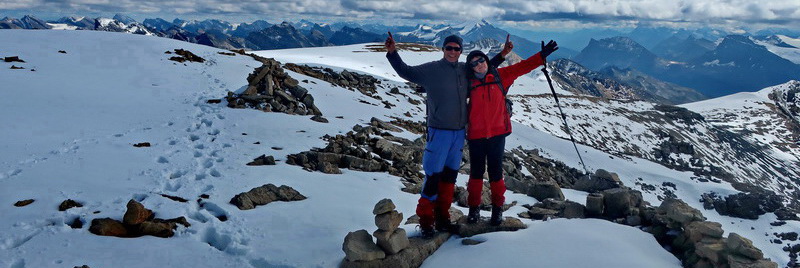
Welcome to Marion and Alfred

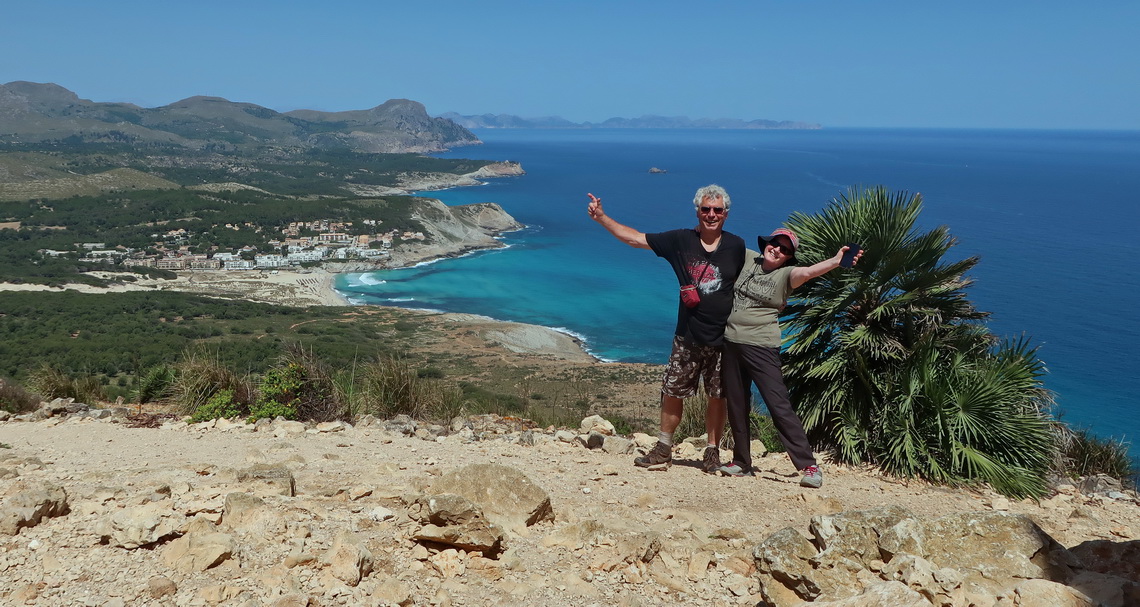
We decided end of 2009 to change our lives, to travel to many countries, to climb up some mountains and to enjoy life. Finally in August 2010, we rented out our apartment, stopped working and started our trip with a Camping Car VW California. The first months we were in the European Alps. At December 2010 we crossed the Atlantic Ocean to Argentina with a freighter

Our idea is to travel from Patagonia to Alaska!

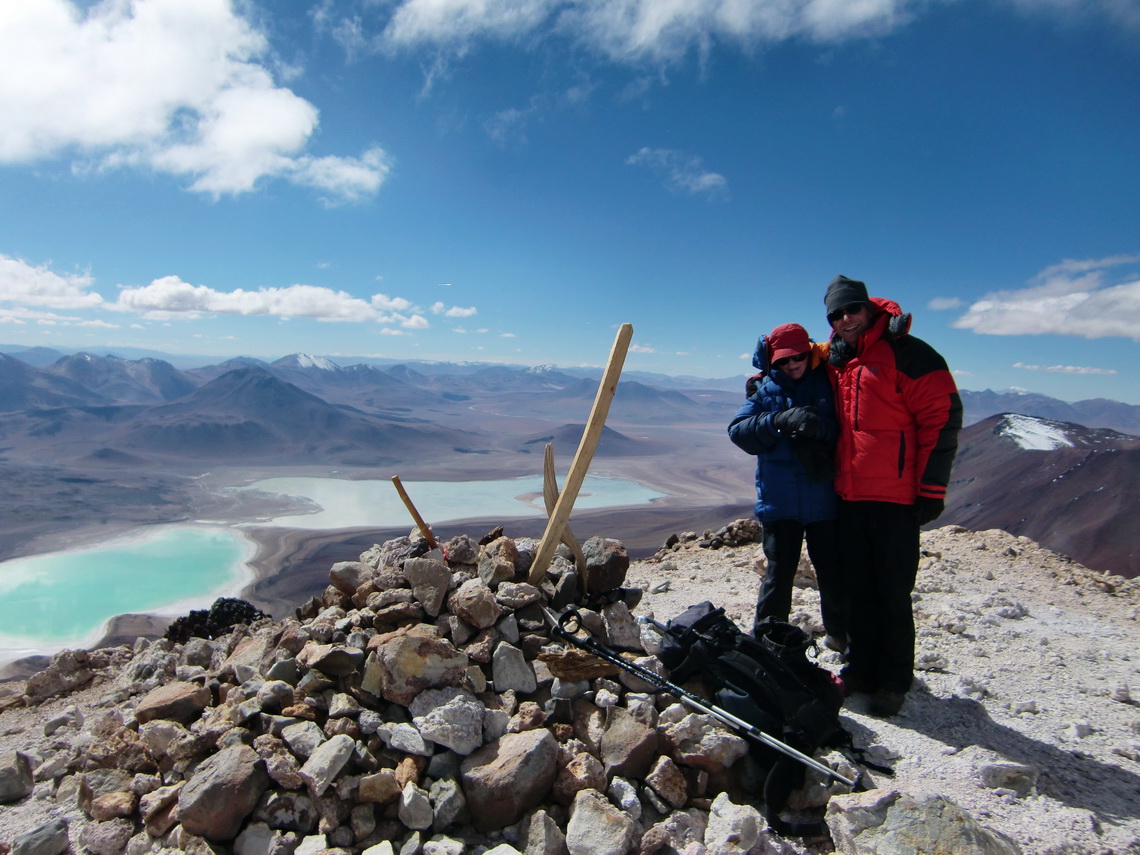
We were able to climb up Mercedario (6770 meters) in the Argentine High Andes, Ojos de Salado (6893 meters) in the Chilean Andes and many other mountains. We enjoyed the Atacama Desert with its volcanoes; the Pacific Coast in northern Chile; the Cordillera Real and Amazon Jungle of Bolivia; the Lowlands of Paraguay, Argentina and Uruguay; the Atlantic Coast of Patagonia with its abundant animal and sea lives; the harsh and remote island Tierra del Fuego at the southern end of the world; the rough but marvelous southern Andes with stunning pinnacles like Paine Grande or Cerro Torre; and the beautiful volcanoes in the Lake Districts of Argentina and Chile. Now we are back in Germany to visit our families and friends. We will return to South America end of May 2012 to travel to northern Chile, Bolivia, Peru and Brazil.

We are happy about every comment, question and hint. Please use our guest book in the main menu, the email or comment functions in the articles. Of course we will answer as soon as possible, but it might happen that we have no Internet connection for some days.

to travel to Patagonia
 

Chiloe and Valdivia

Friday, 20 April 2012 17:42

Chiloe is with 9,600 sq km the second biggest island of South America, located more than 1000km south of Santiago in the Pacific Ocean. It is a hilly and green but harsh land with more than 2200mm precipitation per year. Most of its population live in the two bigger towns Ancud and Castro, which have about 20,000 inhabitants each. Many descendants of the native tribe Huilliche live in its smaller villages and settlements. Thanks to its isolated location, Chiloe suffered less from the mainstream of Spanish colonial development.

Chiloe is famous for salmon farming, its fine wooden churches, picturesque Palafitos (houses on stilts above the water), pristine beaches, dense cold rain forests, abundant fauna and flora. Huge areas are protected by national, regional or private parks.

250km North of Chiloe is the city of Valdivia, which has with more than 120,000 people approximately the same population like Chiloe.


Volcan Chillan and Volcan Antuco

Friday, 16 March 2012 23:48

The twin Volcanoes Chillan Viejo (old) and Nuevo (new) are 80 kilometers East of the town Chillan and the hot springs with the same name. This region is famous for its ski resort, the largest in Chile. Both volcanoes are active with some smoking rocks as well as the neighboring Nevados de Chillan. Besides their relatively low height of approximately 3200 meters the glaciation is quite big. 

50 km South of the Volcanoes Chillan is the Parque Nacional Laguna del Laja. The lake Laguna Laja originated in the year 1873 due to a heavy eruption of the Volcan Antuco. This mountain is also a perfect black and / or white cone of close to 3000 meters height dominating the landscape of the national park. But it is excelled by the rough Sierra Velluda with its huge glaciers.

End of February 2012 we headed fast to the small village Bulnes to visit our friends Petra and Paddy in the winery Vina Chillan, see www.vinachillan.cl. This is one of the southernmost wineries on earth driven by Ruedi, like Petra and Paddy a Swiss citizen.


Volcan Lanin, the king of the lake districts

Friday, 02 March 2012 16:59

Volcan Lanin is with 3776 meters sea level the highest point of both lake districts, Argentina and Chile. It overtowers all nearby mountains more than several hundreds meters, only Cerro Tronador more 200km South achieves with 3478 meters a similar altitude. Volcan Lanin is a perfect cone of more than 2500 meters vertical highness and it is supposed to be one of the most beautiful mountains on earth. 

The access to the summit of Volcan Lanin is relatively easy: First a six to seven hike to the upper hut Refugio CAJA from the ranger's office on the Paso Mamuil Malal or Tromen on its Argentine side, followed by another six hours trip over snow, scree and some rocks to the top. Due to several accidents on the mountains are the rangers very strict; they check your whole equipment like crampons and if you can use them properly.

In Argentina is the marvelous and huge park Parque Nacional Lanin North and South of the volcano with superb hiking capabilities, magical forests and beautific lakes.


Volcan Calbuco

Sunday, 19 February 2012 19:53

Volcan Calbuco is one of the most active in Chile. Its last major eruption was in the year 1961. The outburst of 1893 blew up its summit cone. Thus its shape is not so perfectly like the neighboring Volcan Osorno, which is supposed to be one of the most beautiful mountains on earth. Both volcanoes are located close to the lake Lago Llanquihue in the marvelous Lake District, the X region of Chile. Puerto Montt is its capital, a bustling city of more than 120,000 people and situated on the north shore of the fjord Seno de Reloncavi. 20km North of Puerto Montt is one of the major tourist destination in southern Chile: Puerto Varas on the southwest side of the huge Lago Llanquihue. Both towns have obvious Austrian, German and Swiss influence like the whole Lake District of Chile.

We arrived in Puerto Montt three days prior to Tommy's return fly to Germany in the morning of January 31st 2012 and it was raining cats and dogs. We used the time to visit Nuevo Braunau and Puerto Varas, which have also some beauty at bad weather.


Carretera Austral

Thursday, 16 February 2012 22:18

The last section between Puerto Montt and Cochrane of the Carretera Austral (Southern Highway) in the South of Chile was opened foremost in 1988. Nowadays this street leads to Villa O'Higgins close to the southern continental ice-field Campo de Hielo Sur. It is mainly a rough, dirty and dusty road including some sea crossings by ferries.

Driving the more than 1000 km of the Carretera Austral is still an adventure in very dense cold rain forest between steep mountains and vast glaciers in an extremely thin populated environment. Just few settlements with some people are located on this route. There is only one bigger city: Coyhaique the capital of the XI region of Chile, Aysen.

Besides the harsh climate even sometimes in summer, the tourism industry detects more and more the incredible beauty of the landscape. Consequently the numbers of travelers increase from all of the world. A specialty might be the unusual high quantity of people from Israel. Somebody from there told us that this part of Patagonia is the Praised Land and every Israeli has to visit it, ... .


Perito Moreno Parque Nacional and Cueva de los Manos

Saturday, 11 February 2012 18:53

Parque Nacional Perito Moreno is with approximately 1200 visitors one of the remotes national park in Argentina. Perito (master) Francisco Moreno explored the geography, fauna and flora of Patagonia at the turn of the 19th / 20th century. Not only this park is named after him, also a small town and the famous glacier (see article Cerro Torre, Cerro Fitz Roy and Glaciar Perito Moreno).

This park is a rough and windswept area decorated with cobalt and aquamarine blue lakes, snowy peaks and glaciers. It is located on the southeast side of Cerro San Lorenzo, which is with 3706 meters sea level one of the highest mountains in Patagonia. The entrance to the Perito Moreno national park is free of charge as well as two basic campsites.

200km northeast is the cave Cueva de los Manos, which had been declared as world heritage by the UNESCO in 1999. There are fabulous and more than 9000 years old paintings, mainly of left hands.


Cerro Torre, Cerro Fitz Roy and Glaciar Perito Moreno

Sunday, 05 February 2012 22:49

UNESCO declared the Los Glaciares National Park in the province Santa Cruz a World Heritage Site in 1981. In the southern part it includes the Perito Moreno glacier, a white giant whose 5 km long front rises 60 meters above the lake Lago Argentina, the largest lake in Argentina. Perito Moreno is one of the last glaciers which increases still and it moves more than 2 meters per day. Great masses of ice crash every hour into the lake.

In the northern part of the Los Glaciares National Park are some of the most imposing mountains of on earth. The granite monolith Cerro Fitz Roy is with 3405 meters the highest point of southern Patagonia, which rises which its satellites directly over the Argentine steppe. Behind is a chain of pinnacle, which are the eastern border of the Campo del Hielo Sur, the biggest ice-field outside the poles and Greenland. The most famous, tallest and challenging is 3102 meter high Cerro Torre, both  dream and nightmare of every top climber.


Pali Aike and Torres del Paine - Christmas 2011

Sunday, 22 January 2012 20:58

Pali Aike is a fine and remote National Park in southern continental Chile, located close to the Strait of Magellan and the Atlantic. The name Pali Aike is from the original tribe Tehuelche and means Devil's Country. It is a harsh volcanic steppe decorated with extinct craters, caves and other volcanic formations. Wildlife is abundant, for instance you might see Guanacos, Eagles, Armadillos or Grey Foxes. The entrance to the Pali Aike National Park is free of charge as well as a nice campground. There are several superb hikes.

We came back to the Torres del Paine National Park on December 22nd 2011, because Tommy, Marion's brother wanted to hike the W. This is the most popular part of the Circuito Grande, which we did few weeks ago. There are some "side" hikes at the Guarderia Lago Grey like the viewpoints Mirador Zapata and Mirador Ferrier


Tierra del Fuego - Argentina

Wednesday, 11 January 2012 23:51

There are two bigger cities in the Argentine part of Tierra del Fuego: Rio Grande and Ushuaia. The first one is a military base and famous for sport fishing. The latter one is the perfect synthesis of sea, ice and mountains. Ushuaia is situated on the Beagle Channel with huge, steep and glaciated pinnacles in its background. The natural Beagle Channel connects the Atlantic with the Pacific Ocean. It was discovered by Charles Darwin's expedition in the 19th century and named after the used vessel.

But Ushuaia has more superlatives: It is the main gateway to the Antarctic, 90% of the visitors start from here. It is the southernmost city of the world if you consider the Chilean Puerto Williams as a village (60,000 inhabitants versus 2,500). It is literally the end of the world. It has the most southern ski resort, starting more or less at sea level. It is the main touristic destination of Tierra del Fuego and consequently a little crowded in its seasons.


Tierra del Fuego - Chile

Tuesday, 20 December 2011 15:29

Tierra del Fuego is with its 47,000 square kilometers the largest island of South America and it is located at its southern end: Final del Mundo - the end of the world. It is shared between Argentina and Chile, approximately two third belong to Chile. The Argentine part is much more populated, but only a little more than 100,000 people live in whole Tierra del Fuego. Its is a harsh island with two different geographical regions: North and East is the windswept pampa; South and West are the Andes with steep pinnacles, huge glaciers, remote fjords and numberless islands in front.

The first people came 10,000 years ago to Tierra del Fuego and were able to deal with the hard conditions. But the European immigrants exploited and eradicated the native people at the end of the 19th century. Hernando Magellan gave Tierra del Fuego its name - Fireland, because he saw a lot of fires on the island which were used by some of the native tribes for their communication.


Punta Arenas and its surroundings

Wednesday, 07 December 2011 23:17

Punta Arenas is with 140,000 inhabitants the biggest city in southern Patagonia and the capital of the XII region Magallanes y Antartica of Chile. The busy industrial town is located on the Strait of Magellan and it is the most important port in this area. It is also a famous cruise and tourist destination.

Its environment is beautiful with forests, mountains, lakes and the Pacific Ocean. Few kilometers West of Punta Arenas is the National Park Reserva Nacional Magallanes with a lot of nature including hiking capabilities and viewpoints. But there are also a small skiing area, many radio transmitters and a military station on its highest point Monte Fewton.

South of Punta Arenas at the very end of continental South America is a remote area on the Strait of Magellan with superb trekking possibilities like Monte Tarn (825 meters), or the lighthouse Faro Cabo San Isidro.


Torres del Paine - Circuito Grande

Wednesday, 23 November 2011 23:21

The Torres del Paine Park in southern Chile is probably the finest and most famous National Park of South America. Rising close to 3,000 meters above the Patagonian steppe, the Torres del Paine dominates the landscape with sensational granite pillars, spectacular glaciers and marvelous lakes. It provides excellent hiking possibilities like the more than 100km long Paine Circuit, which can be done in 8 to 10 days. All needed facilities like campgrounds with hot showers, mountain huts or food stores are available. but the weather is very changeable. It is located 150km North of Puerto Natales, the second biggest town of Chilean Patagonia.

Puerto Natales is on the windswept shores of Seno Ultima Esperanza - Last Hope Sound. The 16,000 people city is the bustling hub for the Torres del Paine National Park. Both, the city and the park, are very crowded with tourists between mid of December and end of February.


Penguins and more - Atlantic Coast of Patagonia South of Puerto Madryn

Friday, 18 November 2011 22:10

South of Puerto Madryn are several highlights like the Museo Paleontologico Egido Feruglio in Trelew with stunning life-sized dinosaur exhibits, the Natural Park Cabo Dos Bahias with rich wildlife, the Monumento Natural Bosques Petrificados with its fossilized gigantic trees and the Parque Nacional Monte Leon with more than 75,000 breeding Penguin pairs in springtime and early summer.

Trelew is a midsized town of about 100,000 people, located 65 km South of Puerto Madryn. Its origin is Welsh and its name is a homage to Lewis Jones, who promoted railway expansion in the province Chubut: tre - town and lew - Lewis. We arrived in Trelew in the late afternoon of October 26th 2011 and spent the night on the shore of the Parque Recreativo Laguna Cacique Chiquichano, close to the planetarium.


Whales and more - Atlantic Coast of Patagonia North of Puerto Madryn

Saturday, 29 October 2011 19:53

The 3600 sq km big Peninsula Valdez in the province Chubut is one of the nature treasures of Argentina. It bustles of abundant wildlife: Sea Lions, Elephant Seals, Guanacos, Rheas, Penguins and different kinds of birds. But the star is the nearly 12 meters long and 27 tonnes heavy Southern Right Whale. Female bear young and breed in springtime in the shallow waters of the bays between the peninsula and continent. Peninsula Valdez is a World Heritage and consequently protected accordingly. In its center is one of the lowest depression in South America with salt lakes up to 42 meters below sea level. 

Few hundred km North and 40 km East of the city Viedma is the village Balnerio El Condor with maybe the largest Parrot colony of the world: More or less 35,000 dens of parrots are in its cliff faces. Close is an outstanding Sea Lion colony in La Loberia with several hundred animals.


Sierra de la Ventana

Sunday, 23 October 2011 01:33

The Sierra de la Ventana is the highest mountain range in the vast province Buenos Aires few kilometers North of Bahia Blanca and 800 Southeast of the capital. There is also the tallest peak close to the Atlantic coast of Argentina, the Cerro Tres Picos with 1239 meters sea level. Ventana means windows: There is a huge one (approx 8 by 5 meters) close to the summit of the Cerro la Ventana. These mountains are supposed to be the oldest in Argentina, but they are relatively rocky.

This region is one of the top holiday destinations with a lot of nature and outdoor activities like hiking, but sometimes a little bit crowded. Some parts of these mountains are protected by the Provincial Park Ernesto Tornquist and consequently regulated by rangers. Ernesto Tornquist is the founder of the biggest town Tornquist in this area.


Buenos Aires

Thursday, 13 October 2011 23:48

Buenos Aires is the capital of Argentina and it is supposed to be one the ten most populated urban centers of the world. According to Jorge Luis Borges, one of the greatest and famous writers of Argentina, Buenos Aires is breathtaking ugly. On the other hand it is an overwhelming cosmopolitan metropolis with unbelievable nice people, marvelous places and stunning buildings.

We spent 3 days in Buenos Aires mid of August 2011 before we flew to Germany and 2 days after our return beginning of October. We parked our camper in Colonia del Sacramento in Uruguay, close to the ferry port. Colonia is on the other side of the Rio de la Plata and there is a  frequent  ferry boar service to Buenos Aires. We found the very nice hostel San Telmo (Peru 708) in San Telmo, one of the most exciting quarters of Buenos Aires.


Uruguay - From Salto to Colonia

Monday, 05 September 2011 11:24

Uruguay is the second smallest country in South America, but still twice the size of Austria. It is located east of the large Rio Uruguay, which is the other big conflux of the Rio de la Plata. Uruguay is called the Switzerland of South America due to its stability, prosperity and wealthyness. A lot of banks are in its capital, Montevideo. The landscape is hilly, green and grassy with many cows. In addition Uruguay has nice coasts on the Atlantic Ocean, Rio Uruguay and Rio del la Plata.

We visited the west part of Uruguay on the shores of the big rivers between the second biggest city Salto and the ancient, picturesque town of Colonia del Sacramento. Colonia lies opposite of Buenos Aires on the Rio del la Plata. It is a good place to park the car if you fly from Buenos Aires to your home city.


Northeast Argentina and the Cascades of Iguazu

Friday, 05 August 2011 01:12

The Northeast of Argentina is a little bit different to the other parts: Lush and dense vegetation with some forests thanks to lots of water due to huge rivers and swamps. The absolute highlight is the Cascades of Iguacu in the very North of the province Misiones. The Southern part belongs to Argentina, the Northern to Brazil. Enormous amount of water is falling 70 meters down in more than 250 hundred cascades from a flat Basalt plateau. These waterfalls are ones of the top destinations in South America; thus many tourists visit them and there is a good infrastructure.

Interesting are the ancient Jesuit villages like San Ignacio Mini in Misiones, some other National Parks like Rio Pilcomayo in the province Formosa on the border to Paraguay and hot springs in the county Entre Rios.


From Asuncion to Ciudad del Este

Sunday, 31 July 2011 18:28

Paraguay is one of the smaller and less populated countries in South America located between Bolivia, Brazil and Argentina without sea coast. Small means that it is a little bit bigger than Germany. Less populated means fewer inhabitants than Austria or Switzerland. It is divided by the river Paraguay into two major parts: The western Chaco, which is a flat, hot and arid lowland with very few people and the eastern green highlands with 90% of Paraguay's population. Paraguay was the first state in South America with two official languages: Spanish and Guarani of the indigenous people (also Guarani).

Asuncion is the capital of Paraguay on the huge river Rio Paraguay. It is also the economical center and with more than 1 million inhabitants the biggest city in Paraguay.


Samaipata and its environment

Monday, 25 July 2011 23:50

The village Samaipata is located in a marvelous environment in the first eastern ranges of the Andes. Its main attraction is the pre Inca fort El Fuerte de Samaipata, which is an UNESCO world heritage and one of the most important ruins of Bolivia and South America. The Incas used this fort as one their most outposts. East were and still are the very strong tribe Guarani, who defeated several times the Incas and prevent their further extension to East.

20km east of Samaipata are the Chorros de Cuevas, a paradise with three cascades, clean and cold water. It is an ideal destination on hot days to refresh and cool down.


From La Paz to Santa Cruz and the National Park Amboro

Friday, 15 July 2011 15:28

The National Park Amboro between Cochabamba and Santa Cruz is situated on the lower slopes of the Andes to the Amazonas basin. It is famous for its density of game and insects, for beautiful waterfalls and natural swimming pools, and thick green jungle fauna. There are few camps inside this park, which can be accessed with a guide from the North via Buena Vista or the South via Samiapata.

Cochabamba is the third biggest city in Bolivia with more than 800,000 people. It is located in a nice valley of the Andes at 2570 meter sea level; thus it has a very pleasant climate. It is half the way between La Paz and Santa Cruz, the other two large cities in Bolivia. Its main attraction is the huge Jesus monument "Cristo de la Concordia" on a hill, more than 40 meters high.


Cordillera Real 2011 and Yungas

Monday, 27 June 2011 23:36

The Cordillera Real is the mightiest mountain range in Bolivia with several peaks above 6000 meter. It is situated on the east side of the Altiplano and it gets in summer a lot of precipitation from the Amazon area. Thus the glaciations are heavy for this latitude; the permanent snow line starts at 5200 meter. We climbed in June 2011 Cerro Saturno (5006 meter seal level), Serranias Almillanis (5108 meter) and Cerro Charkini (5392 meter). To achieve the summit of the latter one we had to cross a glacier with huge crevasses.

The Yungas are the lower slopes down to the Amazon basin. They have a rich flora and fauna, thanks to the clouds and rain coming from the Amazonas. A nice tourist destination is the village Coroico, which is accessible now from La Paz by a fully tarred road. But you have to cross the 4650 meter high pass Cumbre Coroico or La Cumbre.


From Uyuni to La Paz via Potosi

Monday, 20 June 2011 01:04

Potosi is with more than 120,000 inhabitants the highest city of our world at 4100 meters sea level. Potosi was the richest town on earth due to enormous silver findings in the mines of the mountain Cerro Rico. The exploitation of silver started already in the 16th century and it was shipped mainly to Europe. But the silver was a curse for the local people, many died in the mines due to inhuman working conditions. Now the silver is gone, but tin and zinc are mined nowadays.  

La Paz is with more than 2,000,000 people the largest city of Bolivia, its economical heart and its seat of government. It is beautifully situated in different valleys of the Altiplano between 3200 and 4100 meters surrounded by very high and white mountains. Famous are the various markets of La Paz, a lot of nice places and the Valle de Luna (moon valley) with stunning earth pinnacles.


Volcan Uturuncu and Laguna Colorada

Monday, 13 June 2011 17:10

The Volcano Uturuncu is with 6008 meters sea level the tallest mountain in the south part of Bolivia. It is an active volcano with two peaks. The last eruptions were in April 2003, after being hundreds of years inactive. There were some mining activities on this mountain and a rough dirty roads leads into the saddle between the two peaks. This road can be used by good 4-wheel cars up to 5400 meters, depending on the snow conditions. Uturuncu lies in a very remote area: The access from Uyuni is one long day by dirty roads, only possible with a 4-wheel car.

The 60 square kilometer big Laguna Colorada (red lake) is 4h drive West of Uturuncu in an altitude of 4275 meters. It is an unique natural spectacle, because the water color seems to be red, green and white depending on the sunset. This is caused by plankton. The plankton attracts a lot of birds like flamingos.


Volcan Tunupa and Salar de Uyuni

Tuesday, 07 June 2011 22:59

The Salar de Uyuni is with 160 km length and 135 km width the largest salt area of our world at an altitude of approximately 3700 meters. The salt is between 2 and 7 meters thick, so it can be accessed by 4x4 cars if there is not too much water. In the rainy season between December and March the Salar de Uyuni becomes a tremendous huge mirror. The water dries in the following months more or less, so the surface becomes totally white. The Volcano Tunupa is situated on a peninsula of the Salar de Uyuni and provides fantastic views to the Salar because it overtops the Salar de Uyuni more than 1500 meters. Due to its outstanding location the Volcano Tunupa is a holy mountain of the Aymara people.


Salta and Quebrada de Humahuaca

Thursday, 02 June 2011 23:58

Salta is one of the most marvelous cities in South America. It is the only one in Argentina with the add-on "La Linda", which means The Beautiful. No other city in Argentina has so many historical buildings, places and parks. Salta is with approximately 400,000 inhabitants the second biggest city in northwest Argentina. Salta has a pleasant warm climate even in late autumn because it is situated just 1200 meters high on the eastern slopes of the Andes. Closed to Salta is the Quebrada (valley) de San Lorenzo with more or less tropical flora and fauna. North of Salta in the province Jujuy is the famous Quebrada de Humahuaca, which directs to the border of Bolivia.


Page 1 of 2